English
 Company Profile
 Company News


 FAQ
FAQ
 Video
Video
 Service
 PDF
PDF
Choosing a reliable pet products manufacturer in China is not simply about finding the lowest unit price. For pet brands, wholesalers, distributors and retailers, the right supplier must be able to turn a product idea into consistent, commercially viable products while supporting sampling, customization, quality control and scalable production.
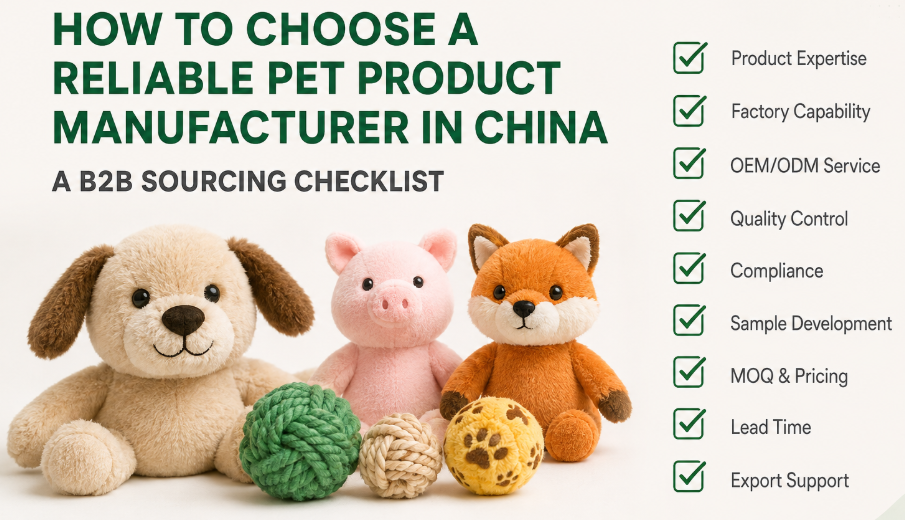
Before placing an order, evaluate product specialization, factory capability, OEM/ODM support, quality control, sampling, MOQ, pricing, capacity and export experience. This checklist helps B2B buyers compare suppliers objectively and reduce sourcing risk.
Pet Product Manufacturer Evaluation Checklist
A strong manufacturer should be evaluated across several areas rather than on price alone.
| Evaluation Area | What to Verify |
| Product Expertise | Experience with your required materials and product category |
| Factory Capability | Production equipment, processes and capacity |
| OEM/ODM Service | Design, material, color, logo and packaging customization |
| Quality Control | Incoming, in-process and final inspection |
| Compliance | Testing and documentation relevant to the destination market |
| Sample Development | Accuracy, revision process and approval standards |
| MOQ | Minimum quantity by design, color or SKU |
| Pricing | Unit price, tooling, packaging, testing and other costs |
| Lead Time | Sampling and mass-production schedule |
| Export Support | Packaging, documentation and shipment coordination |
Use the same checklist for every shortlisted supplier so you can compare factories using measurable factors rather than sales presentations.
Confirm the Manufacturer Specializes in Your Product Category
Pet products cover very different materials and manufacturing processes. A supplier specializing in plush toys may not have the same capabilities as a manufacturer producing natural latex, rubber, TPR or rope dog toys.
Before requesting a quotation, ask what product categories the factory manufactures directly, which materials it regularly processes and whether it has produced similar products for your target market. Product-specific experience can affect material selection, tooling, production consistency and the ability to identify potential design problems before mass production.
For example, buyers sourcing wholesale dog chew toys should evaluate the manufacturer's experience with the relevant materials, molding processes and product structure rather than relying only on general pet industry experience.
Verify the Factory Before Discussing Price
A professional website does not automatically mean the supplier controls the production facility shown online. B2B buyers should verify the manufacturer before making a large deposit, developing tooling or committing to a long-term supply relationship.
Useful verification methods include:
Requesting factory photos or a live video tour
Reviewing production equipment and workshop layout
Asking which manufacturing processes are completed in-house
Checking business and factory documentation
Reviewing third-party factory audits when relevant
Asking for examples of similar products previously manufactured
The key question is not simply whether a supplier calls itself a factory. You need to understand who actually controls production, materials, tooling, quality and delivery.
Check Compliance for Your Product and Target Market
Do not evaluate a manufacturer by asking only, "What certificates do you have?" Compliance requirements can vary according to product design, material, destination country, retailer requirements and intended use.
Ask what tests have been completed for products similar to yours and whether relevant supporting documentation can be provided. For custom pet toys, buyers should also confirm the materials, pigments, coatings, adhesives, components and packaging used in the actual order.
A test report for one existing product does not automatically prove that a newly developed product using different materials or components meets the same requirements. Testing and compliance requirements should therefore be confirmed before mass production rather than treated as an afterthought.
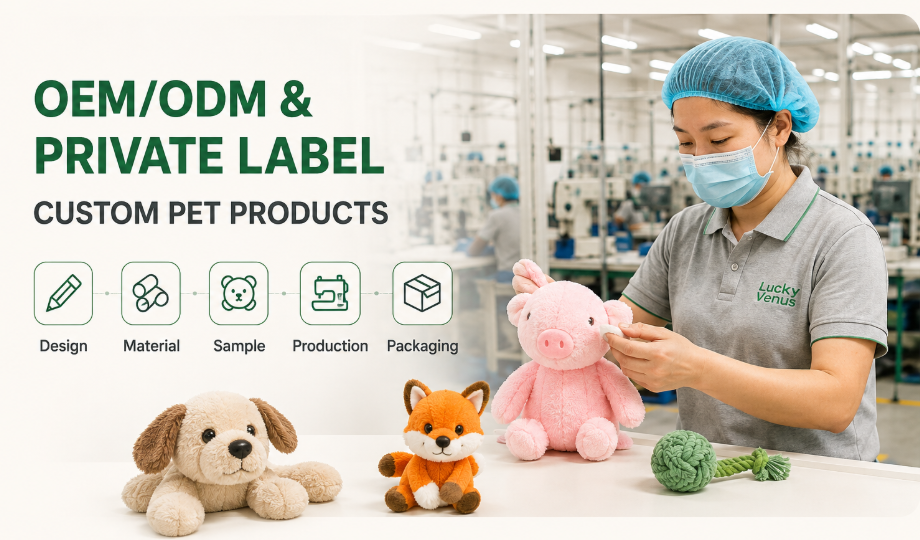
Evaluate OEM, ODM and Private Label Capabilities
For brands developing private label dog toys, customization usually involves much more than adding a logo to an existing product.
A capable OEM/ODM pet product manufacturer should be able to support several stages of product development, including:
Product concept review
Material selection
Size customization
Pantone color matching
Mold or pattern development
Logo application
Functional modifications
Prototype and sample development
Custom packaging
Mass-production preparation
Before contacting a custom dog toy manufacturer, prepare as much project information as possible. This may include drawings, reference samples, dimensions, Pantone colors, logo files, packaging artwork, expected order quantity, destination market and target price range.
Clearer project information usually leads to more accurate quotations and reduces unnecessary revisions during sampling.
Approve a Pre-Production Sample Carefully
Never approve a customized product based only on a rendering or product photograph. A physical sample should become the agreed reference standard for mass production.
Sample Approval Checklist
Material and surface finish
Product dimensions and weight
Color consistency
Logo size, position and durability
Stitching, bonding or molded joints
Squeaker or other functional components
Packaging artwork and labeling
Overall workmanship
Agreed performance requirements
For example, buyers purchasing bulk dog plush toys should pay particular attention to fabric quality, stitching, filling consistency, seams and attached components. Molded rubber or latex products require a different set of inspection criteria.
Document requested changes in writing and confirm that mass production will follow the approved sample and final specification.
Compare MOQ and Total Project Cost
Unit price should never be compared in isolation. When sourcing pet products, ask every shortlisted manufacturer to quote against the same specification and quantity.
| Cost Item | Question to Ask |
| Unit Price | Which quantity and specification is this based on? |
| MOQ | Is the MOQ per design, color or SKU? |
| Sample Fee | What does the fee include? |
| Tooling or Mold | Is this a one-time charge? |
| Logo | Is branding included in the unit price? |
| Packaging | Is custom packaging quoted separately? |
| Testing | Who is responsible for testing costs? |
| Inspection | Can third-party inspection be arranged? |
| Shipping Term | Is the quotation based on EXW, FOB or another agreed term? |
A supplier offering the lowest unit price may not offer the lowest total project cost. For a new brand testing the market, a slightly higher unit cost with a manageable MOQ may be commercially safer than committing to excessive inventory simply to obtain a lower price.
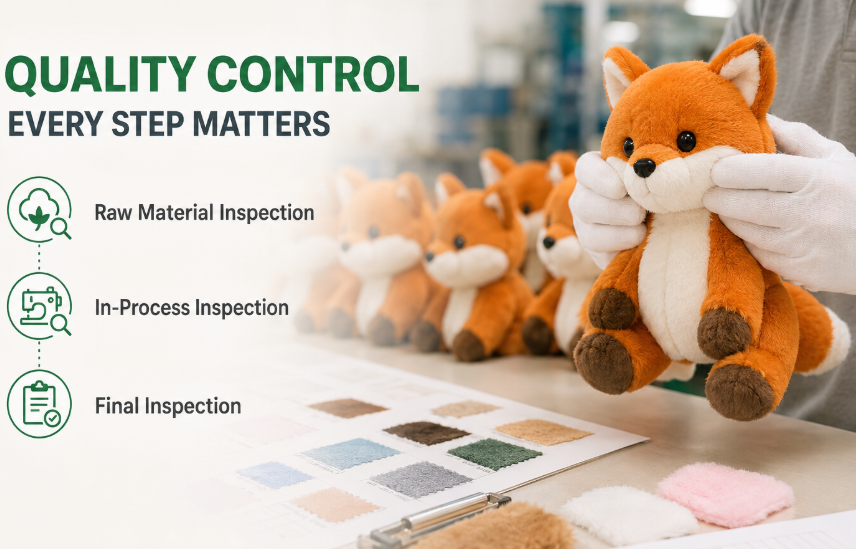
Examine the Quality Control Process
Ask the manufacturer what happens before, during and after production. A structured quality-control process may include:
Raw-material inspection
First-piece confirmation
In-process quality checks
Functional testing
Appearance inspection
Packaging inspection
Final inspection before shipment
Custom products create more manufacturing variables than standard stock items, so quality-control procedures should be confirmed before production begins. Buyers should also ask how defects are recorded and what corrective actions are taken if mass-produced products do not match the approved sample.
Confirm Capacity and Realistic Lead Time
"Fast delivery" is not a useful production commitment. Ask the manufacturer to provide a realistic schedule based on your actual product, customization requirements and order quantity.
Confirm:
Sample development time
Tooling time if a new mold is required
Material preparation time
Mass-production lead time
Packaging production schedule
Inspection schedule
Peak-season production capacity
For recurring orders, ask how production capacity can be reserved. Consistent repeat supply is often more important to wholesalers and established brands than receiving one unusually fast first shipment.
Watch for Pet Product Supplier Red Flags
Be cautious when a supplier:
Quotes before understanding the product specification
Offers unusually low prices without explaining material differences
Refuses to provide factory information
Cannot clearly explain its quality-control procedure
Claims to have every certification without supporting documentation
Pushes for mass production before sample approval
Changes materials or specifications without written confirmation
Provides unrealistic production lead times
Avoids discussing defect handling or inspection
One issue does not necessarily mean the supplier is unreliable, but several warning signs together should trigger further verification before an order is placed.
Ask These Questions Before Choosing a Manufacturer
Before selecting a pet toy manufacturer, ask every shortlisted supplier the same core questions:
Have you manufactured products similar to ours?
Which production processes are completed in-house?
What materials do you recommend for this design and why?
What is the MOQ per design, color and SKU?
What costs are not included in the unit price?
How does your sample approval process work?
What quality checks are performed during production?
What testing or documentation can you support?
What is the realistic production lead time?
How are defects or products that do not match the approved sample handled?
A reliable supplier should be able to discuss manufacturing limitations, alternatives and trade-offs rather than simply answering "yes" to every request.
Consider Product Range When Building a Long-Term Supplier Relationship
For wholesalers, distributors and multi-category pet brands, supplier selection should also consider whether the manufacturer can support future category expansion. Working with fewer qualified suppliers can simplify communication, sampling, quality management and purchasing as your product range grows.
For example, businesses planning to expand beyond molded or plush products may also evaluate categories such as dog rope toys wholesale. However, each category should still be evaluated according to its own materials, production processes and quality requirements.
Working With Lucky Venus on Custom Pet Products
Lucky Venus works with pet brands, wholesalers and distributors on OEM, ODM and private label pet product projects, including latex, rubber, plush, rope and other pet toy categories.
Whether you are sourcing existing products for wholesale distribution or developing custom pet toys, providing detailed project information at the beginning can make the sourcing process more efficient.
When requesting a quotation, prepare your product design or reference sample, expected quantity, preferred materials, customization requirements, packaging requirements and destination market. This gives the manufacturing team enough information to evaluate feasibility, recommend suitable production options and prepare a more accurate quotation.
Frequently Asked Questions
How do I find a reliable pet product manufacturer in China?
Start with manufacturers that specialize in your required product category. Verify their production capabilities, request samples, review quality-control procedures and compare quotations using identical specifications rather than evaluating price alone.
How can I verify a pet toy factory?
Request factory information, production photos or a live video tour, ask which processes are completed in-house and review relevant business or factory documentation. For larger orders, a third-party factory audit may also be appropriate.
What is the typical MOQ for private label pet toys?
MOQ varies according to product type, material, color, customization, packaging and tooling requirements. Always ask whether the stated MOQ applies per order, per design, per color or per individual SKU.
What should I check in a custom pet product sample?
Review materials, dimensions, colors, branding, workmanship, functional components, packaging and any agreed performance requirements. The approved sample should be retained as the reference for mass production.
How should I compare quotations from pet product manufacturers?
Compare quotations using the same product specification and quantity. Review unit price together with MOQ, sample fees, tooling, branding, packaging, testing, inspection and shipping terms to understand the actual total project cost.