English
 Company Profile
 Company News








 FAQ
FAQ
 Video
Video
 Service
 PDF
PDF
When German dog owners search for safe and durable toys, materials are often the first concern. With dozens of options—rubber, PVC, plush, foam—many pet parents feel overwhelmed. Among these, latex dog toys have become one of the most trusted choices in Germany thanks to their softness, natural origin, and safety.
In this guide, we’ll explain why latex is considered safer, what to look for when choosing custom dog toys, and how latex compares to other common toy materials. If you want a toy that is gentle on your dog’s teeth, non-toxic, and highly durable, this article will help you make a knowledgeable decision.
Natural latex is a plant-based, renewable material sourced from the sap of the rubber tree (Hevea brasiliensis). Its natural elasticity and softness make it ideal for chew toys, squeaky toys, and fetch toys.

Key characteristics of natural latex:
Soft and flexible
Naturally elastic
Resistant to tearing
Gentle on teeth and gums
Biodegradable and eco-friendly
Odorless or low-odor
For sustainability-minded German consumers, latex is often viewed as a more responsible option than synthetic plastics.
High-quality latex contains no BPA, no phthalates, and no PVC—chemicals that can be found in cheap plastic toys and may cause irritation or toxicity.
For German pet owners concerned about materials (as required under EU regulations), latex toys typically meet safety expectations without added chemicals.
Many dog toys are too hard, leading to:
Cracked teeth
Gum injuries
Mouth fatigue
Latex solves this problem.
Its gentle flexibility allows dogs to chew, squeeze, and carry the toy without damaging developing puppy teeth or sensitive adult gums. This is also why veterinarians often recommend latex toys for:
Puppies in their teething phase
Senior dogs
Small breeds with delicate jaws
Although latex is soft, it is surprisingly durable. It can withstand:
Squeezing
Fetching
Moderate chewing
Repeated bouncing or tugging
Latex toys don’t break into sharp pieces the way hard plastic toys sometimes do. Instead, they deform safely, reducing the risk of choking.
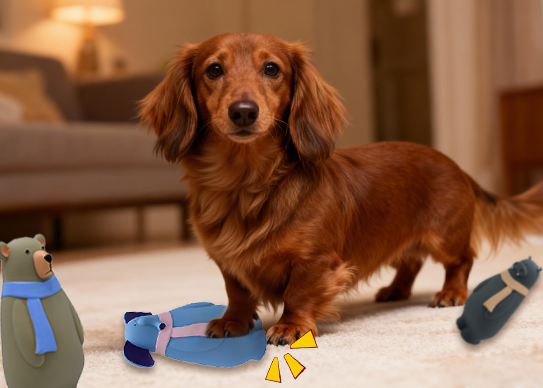
Rubber is tougher but too hard for some dogs
Latex is softer and safer for puppies and gentle chewers
Rubber may last longer for heavy chewers, but latex is safer for everyday play
Plush toys are cozy but easily torn
Latex toys are more durable and don’t contain stuffing (no choking hazard)
Many plastic toys contain chemicals such as phthalates
Latex is naturally non-toxic and more eco-friendly
Plastic can break into sharp pieces; latex does not
Silicone is heat-resistant but heavy and expensive
Latex is lighter and better for fetch or squeaky play
When shopping for a latex dog toy in Germany, look for the following:
Natural latex is softer, safer, and more eco-friendly.
A strong chemical smell might indicate poor-quality manufacturing.
The toy should not have small detachable parts like eyes or small buttons.
A toy that is too small can be a choking hazard.
For EU markets, ensure compliance with safe material standards such as REACH.

If you're looking for pet products wholesale that is natural, safe, gentle, and fun, latex dog toys are one of the best choices available. Their unique combination of non-toxicity, softness, and durability makes them ideal for dogs of all ages. Lucky Venus offer a range of such high-quality, safe toys.
For dog owners in Germany—especially those who value sustainability and safety—latex stands out as a reliable, eco-friendly material that delivers both enjoyment and peace of mind.